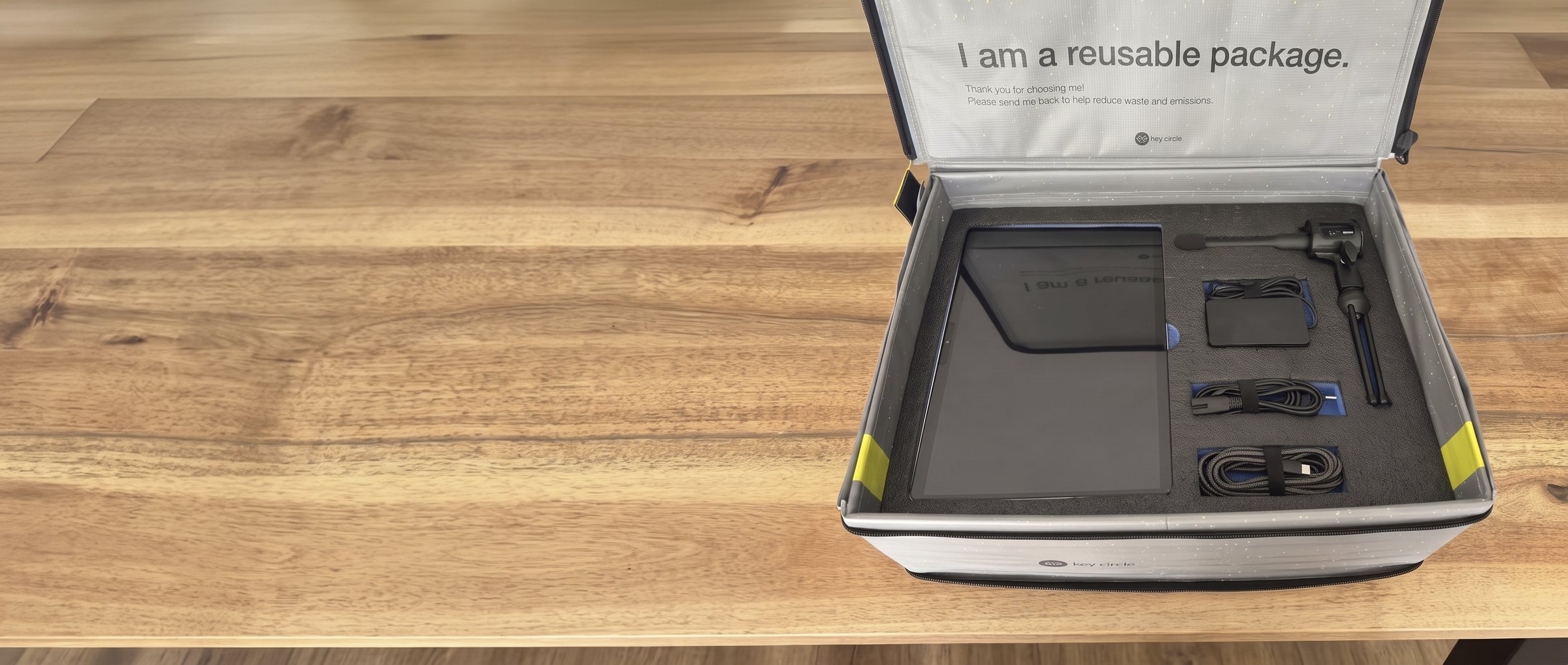
Our self-developed loan devices come to you. We measure via remote access, which saves travel and effort without compromising the assessment.
Especially when the situation is still unclear: when it is not known when a noise occurs and how long it lasts, when it first has to be established what is actually present, or when a first acoustic fingerprint of the situation is needed. The device records for days, we analyse the time history and can derive from the findings what needs to be done next. This is considerably cheaper than travelling on suspicion.
The method plays to its strengths particularly in long-term and night-time measurements: the device stays in place for as long as the question requires, and we can access it at any time without repeated trips.
We clarify in advance which approach is right in your case. The self-test directly below gives an initial indication. Get in touch and we will tell you honestly whether remote measurement is sufficient for your situation.
Compact, robust and designed for shipping, the combination of measurement microphone and recorder covers the majority of questions.
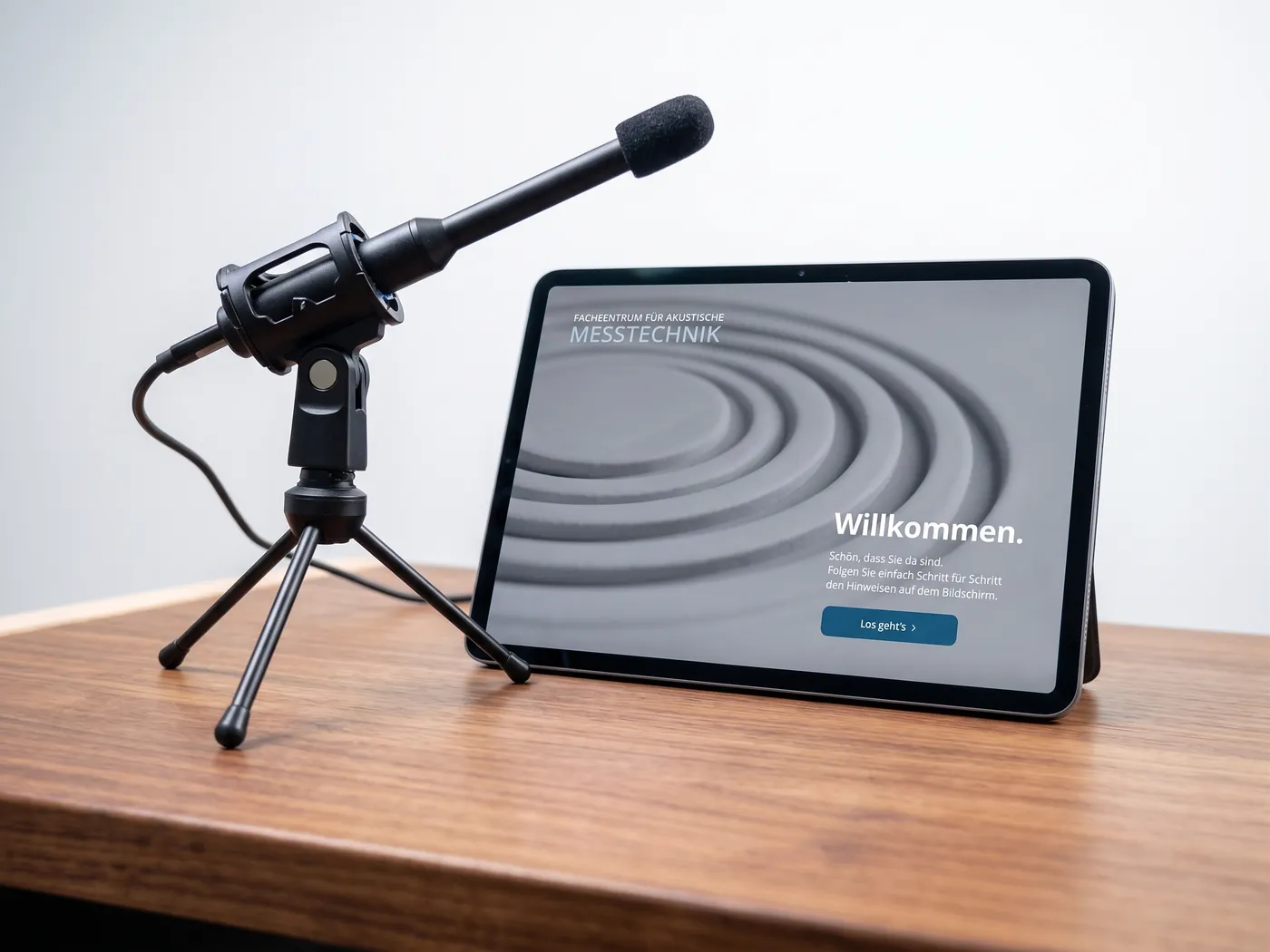

Measurement and analysis systems are systematically characterised against Class 1 reference instrumentation; the corresponding method documentation is available on request.
We put together the right loan device and send it to you in a reusable box, with all accessories and an easy-to-follow quick guide.
You set up the device at the agreed measurement location. All you need to do is put it in place and switch it on; if needed, we guide you through the setup by phone.
We start, monitor and end the measurement remotely, including at night and over longer periods, without anyone having to be on site.
The final assessment is carried out with Class 1 instrumentation according to the relevant standards; the result is a reliable measurement report.
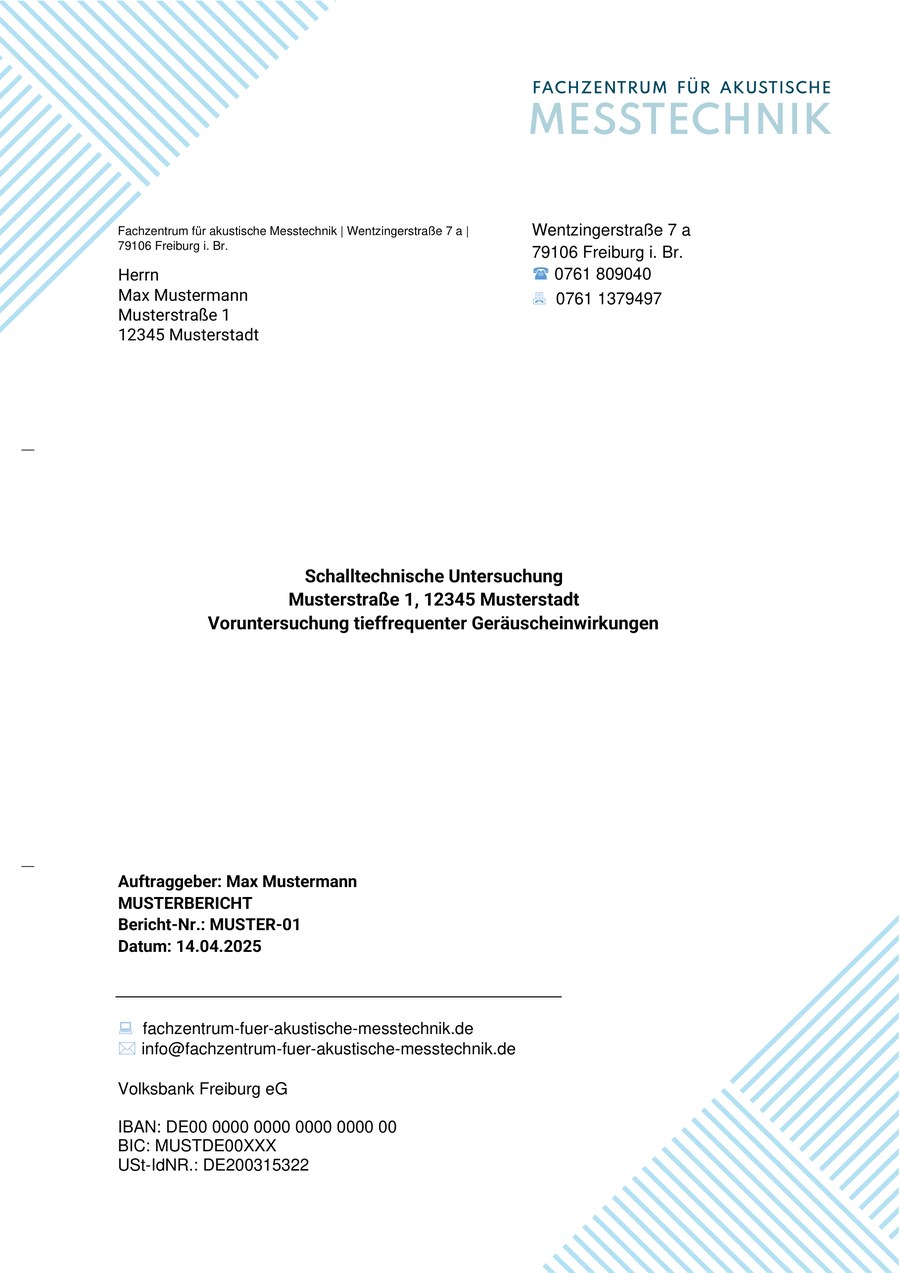
Remote measurement ends with a report that can be read on its own: task and measurement location, setup and devices, the recorded time histories over the entire duration, one-third-octave spectra of the conspicuous sections, the assessment according to the relevant regulations and a recommendation on what follows from it.
The illustration shows the title page of a sample report with fictitious details. Structure and presentation correspond to what you will receive.
The window shows the software we use to control and analyse remote measurements. During recording, the level is displayed live: A- and C-weighted, plus the one-third-octave spectrum in real time. This shows during the recording whether the measurement is usable and which frequencies are present at which level.
The level history of the entire recording lies above the WAV preview. The measurement section is narrowed down precisely with two sliders.
One-third-octave Leq and Fmax are produced for the selected section, together with the overall levels. Everything can be exported as SVG and CSV.
The one-third-octave levels are compared with the hearing threshold according to DIN 45680. It becomes visible which band stands out, as a preliminary check of whether a measurement with Class 1 instrumentation is worthwhile.
The analysis software shown is developed in-house by the Centre; the demo uses synthetic data.
The analysis is a preliminary check and does not replace a final standard-compliant assessment with a Class 1 system. For that, we measure on site with calibrated and traceable instrumentation. Reviewing, classifying and assessing the recordings remain expert work; the software only supports it. More about the software →